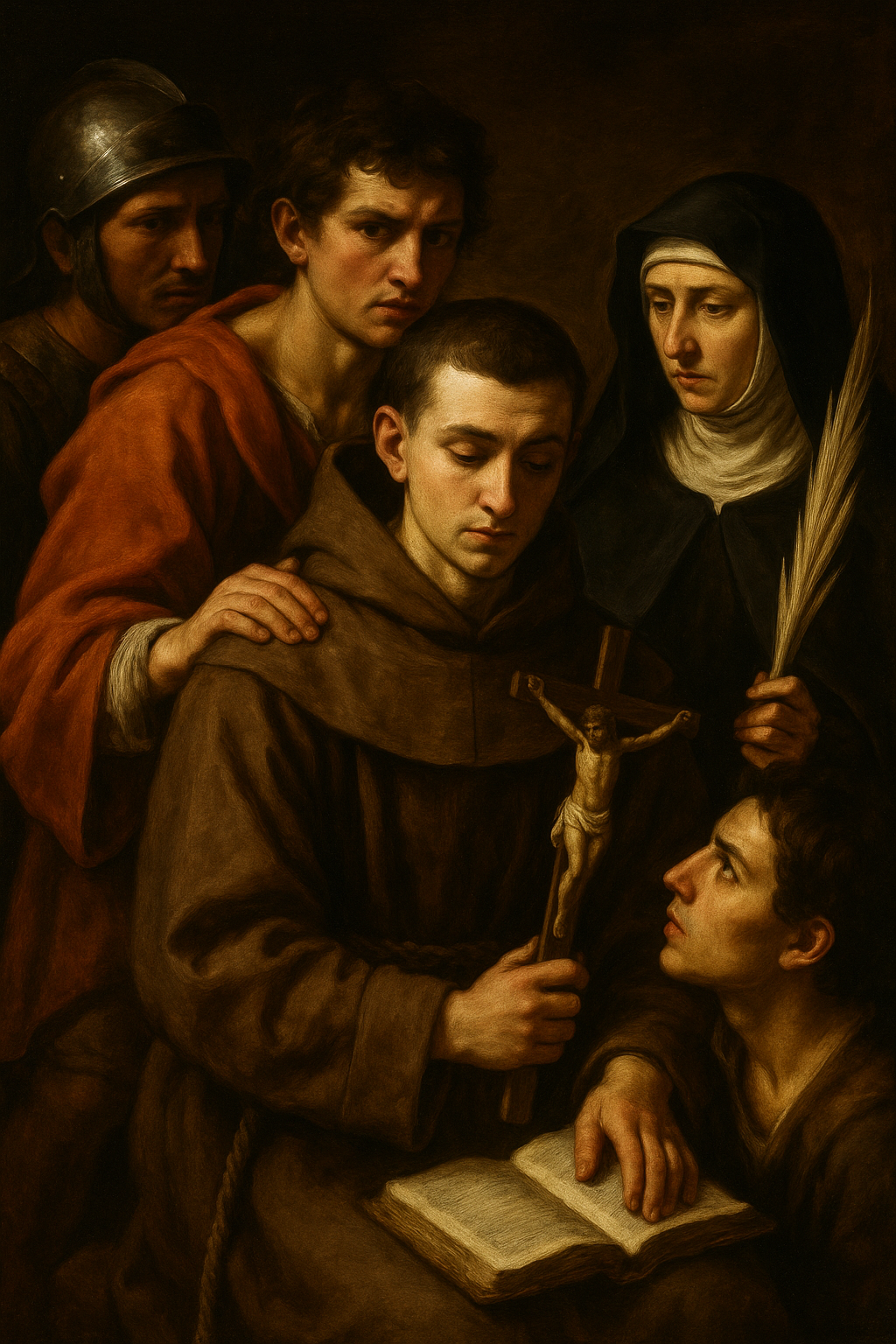
Saint Placid, a disciple of Saint Benedict of Nursia, stands among the earliest fruits of Western monasticism. Born in Rome around 515, he was entrusted to Benedict while still a child. Under his spiritual father’s guidance, Placid learned obedience, humility, and prayer.
This early formation prepared him for a life of sacrifice. The holiness instilled by Saint Benedict did not fade but grew stronger, inspiring Placid and many others to embrace the Gospel fully.
Mission in Sicily
As the Benedictine movement expanded, Placid journeyed to Sicily with a group of companions to establish a new monastery. Among them were Eutychius, Victorinus, Flavia—his sister—and Donatus. Together, they carried the spirit of the Rule of Saint Benedict into a new land.
Their community became a beacon of light through prayer, manual labor, and faithful witness. Moreover, their presence brought strength to Christians in a region still marked by unrest and pagan practices.
Martyrdom for Christ
In the mid-6th century, raiders swept into Sicily and threatened the young monastery. The faithful community was confronted with a demand to renounce Christ.
Placid and his companions stood firm. They refused to abandon the faith, choosing death rather than betrayal of the Lord. Consequently, their martyrdom bore witness to the power of Benedictine spirituality. Through their sacrifice, they showed that love for Christ triumphs over fear and violence.
Veneration of Saint Placid and Companions
The Church honored these martyrs soon after their death. Their witness gave courage to Christians in Sicily and throughout the wider Church. The feast of Saint Placid and his companions is celebrated on October 5, inviting the faithful to remember that the Gospel sometimes demands the ultimate price.
Even today, their memory inspires perseverance. Monastic communities in particular look to them as shining models of fidelity and sacrifice.
For more details, see the Catholic Encyclopedia entry on Saint Placid.
Conclusion
The story of Saint Placid and his companions endures as a testimony of unwavering faith. They lived according to Saint Benedict’s rule, embracing simplicity, prayer, and obedience. In the end, they sealed their devotion with the crown of martyrdom.
Indeed, their lives call us to greater courage and trust in Christ. By following their example, Christians today can learn to persevere through trials and to place God above all earthly fears.