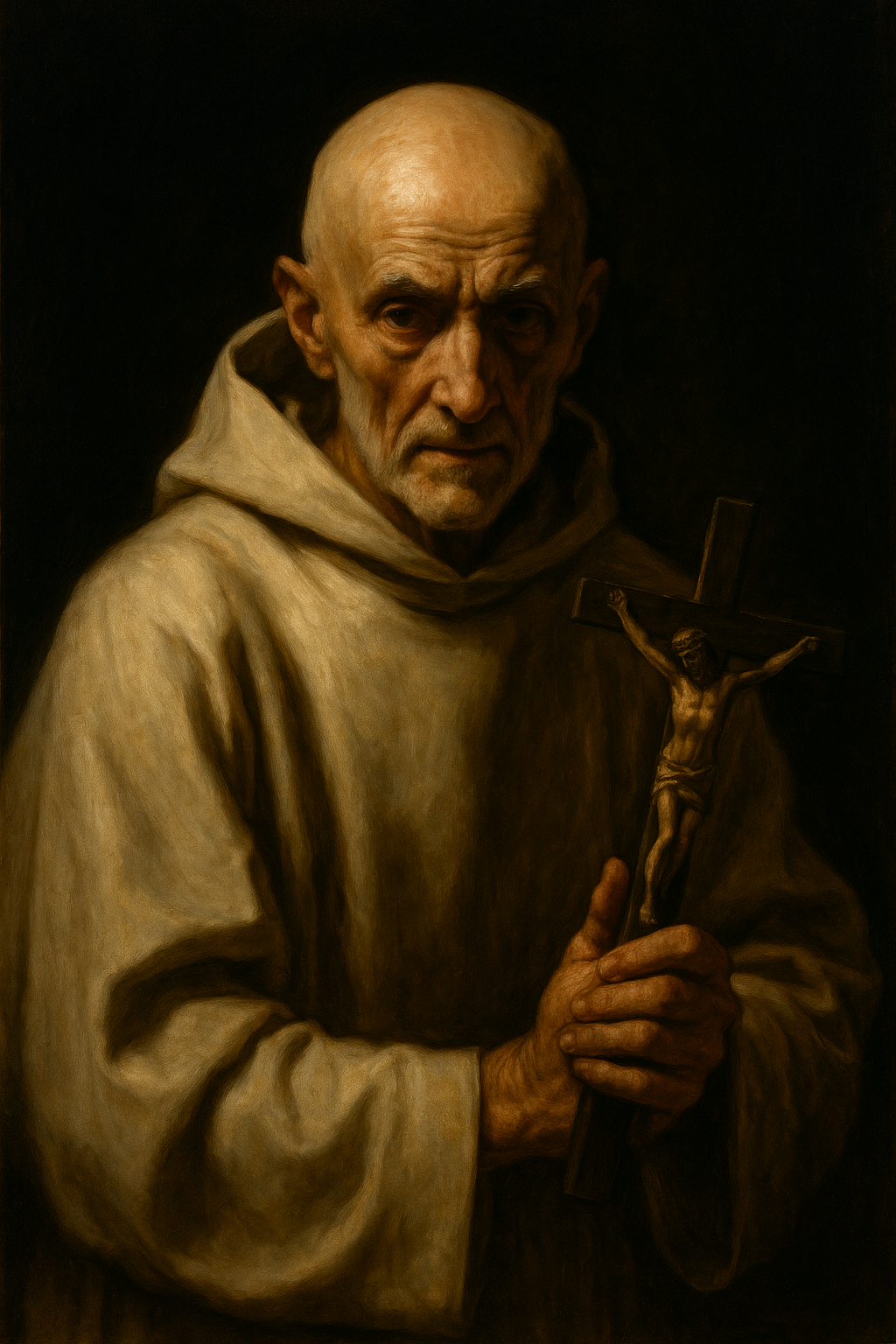
Saint Bruno was born around 1030 in Cologne, Germany, into a noble family. Gifted with intelligence and zeal, he studied in Reims, France, and became a renowned scholar and teacher. His reputation for wisdom and holiness soon led to his appointment as head of the cathedral school in Reims.
Although successful, Bruno longed for a deeper encounter with God. His heart turned toward solitude, prayer, and detachment from worldly affairs. This desire would eventually shape the foundation of an entirely new form of religious life.
A Call to Solitude
Despite his role in the Church, Bruno sought a more austere path. Around 1084, with six companions, he withdrew to the Chartreuse Mountains near Grenoble, France. There, under the protection of Bishop Saint Hugh of Grenoble, they embraced a life of silence, poverty, and prayer.
This community became the beginning of the Carthusian Order. Unlike other monastic groups, Carthusians combined elements of hermit life with communal worship. Each monk lived in a small cell, spending most of his time in solitude, yet came together for liturgy and shared meals on special days.
Founder of the Carthusian Order
The Carthusian way of life demanded total dedication. Bruno and his companions renounced possessions, embraced strict silence, and devoted themselves to constant prayer. Their motto, Stat Crux dum volvitur orbis (“The Cross stands while the world turns”), reflected their unwavering focus on Christ.
Bruno’s vision created one of the most austere yet enduring orders in the Church. The Carthusians remain known for their simplicity, humility, and fidelity to contemplation even today.
For more on the Carthusians, see the Order of Carthusians
Service to the Church
Pope Urban II, once Bruno’s student, later called him to Rome for counsel. Bruno served faithfully, but soon received permission to return to solitude. He settled in Calabria, southern Italy, where he founded another hermitage and guided his monks until his death.
Although drawn into Church affairs, Bruno never abandoned his love of silence and prayer. His ability to balance service with contemplation remains a model for those called to both action and reflection.
Death and Canonization
Saint Bruno died on October 6, 1101, in Calabria. Though not formally canonized by a papal decree, his holiness was quickly recognized, and his feast is celebrated on October 6. The Carthusian Order has preserved his memory with deep reverence, seeing in him the perfect example of a confessor—one who professes the faith through life and witness.
Conclusion
Saint Bruno, Confessor, gave the Church a powerful witness of silence, solitude, and prayer. His foundation of the Carthusians continues to inspire those seeking a life of deep union with God.
In a noisy and distracted world, his legacy reminds us of the value of quiet, of listening to God’s voice, and of living for eternity rather than for fleeting concerns. His feast calls the faithful to rediscover the strength found in prayerful stillness before the Cross.