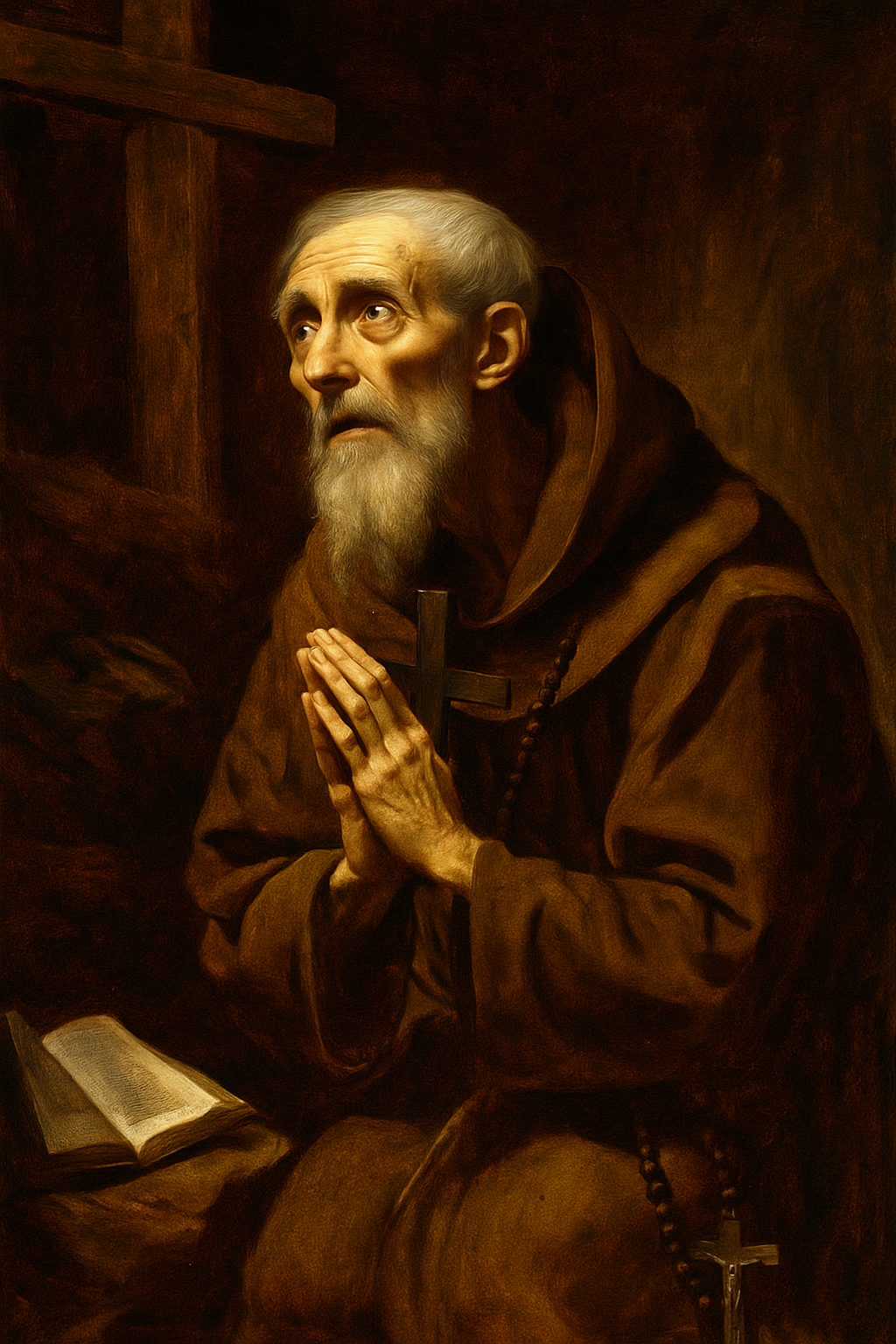
Born in 1499 in Alcántara, Spain, Saint Peter of Alcántara entered the Franciscan Order at a young age. Even in his youth, he was drawn to silence, contemplation, and strict poverty. As the Church in his time faced worldliness and laxity, Peter became a beacon of renewal through his personal holiness and reforming spirit.
He sought to revive the primitive fervor of Saint Francis of Assisi. His mission was not merely administrative but profoundly spiritual—calling his brethren back to lives of simplicity, prayer, and penance. Through his efforts, the Franciscan reform known as the Strict Observance spread widely throughout Spain, rekindling devotion and humility among friars and laity alike.
Learn more: Franciscan Order – Wikipedia
Man of Prayer and Extraordinary Penance
Saint Peter’s life was marked by remarkable austerity. He slept only a few hours a night, often kneeling or sitting, and fasted rigorously. His garments were rough, his cell bare, and his possessions few. Yet, this harsh lifestyle was not out of pride but deep love for God.
He often withdrew to mountain caves or remote hermitages to pray, seeking solitude with his Creator. His contemplation reached extraordinary depths—he was said to be so absorbed in prayer that snow once covered his body as he knelt motionless in adoration. His penances, though severe, radiated joy because they sprang from a heart consumed by divine love.
Friend and Guide of Saint Teresa of Ávila
Among the many fruits of Peter’s holiness was his profound influence on Saint Teresa of Ávila, the great Carmelite reformer. When Teresa faced trials and doubts about her mission, Peter became her spiritual director and confessor. His encouragement gave her strength to persevere in reforming the Carmelite Order.
Saint Teresa herself wrote of him:
“He was a man of heavenly counsels and of wonderful humility. His life was a mirror of all virtues.”
Their friendship reflected the beauty of spiritual collaboration—two saints united in zeal for the renewal of the Church.
Miracles and Death in Holiness
Even during his lifetime, Saint Peter of Alcántara was known for miracles and prophecies. His prayers brought comfort to the sick, and his words converted many hearts. When he died in 1562, his face shone with peace. Soon after, Saint Teresa saw a vision of him entering heaven, clothed in light and glory.
His feast became a celebration of simplicity and sanctity—the triumph of grace through penance and prayer. Pope Clement IX canonized him in 1669, affirming his place among the greatest reformers of the Franciscan family.
Legacy of Penance and Renewal
Saint Peter’s message remains timeless: holiness begins with humility. In an age of comfort and distraction, his example calls the faithful to rediscover silence, fasting, and interior conversion. His reforms strengthened the Church and inspired generations to seek God above all earthly things.
To this day, Franciscans and contemplatives honor his devotion to the Cross, his gentle spirit, and his burning love for God.
Conclusion
Saint Peter of Alcántara, Confessor, stands as a radiant model of prayer and penance. His austere life was not a rejection of the world but a total embrace of Christ crucified. Through humility and love, he became a reformer, a counselor of saints, and a witness to the transforming power of divine grace.
“Truly, he was one of those men whom God raises up from time to time to recall the world to the Gospel.” – Saint Teresa of Ávila