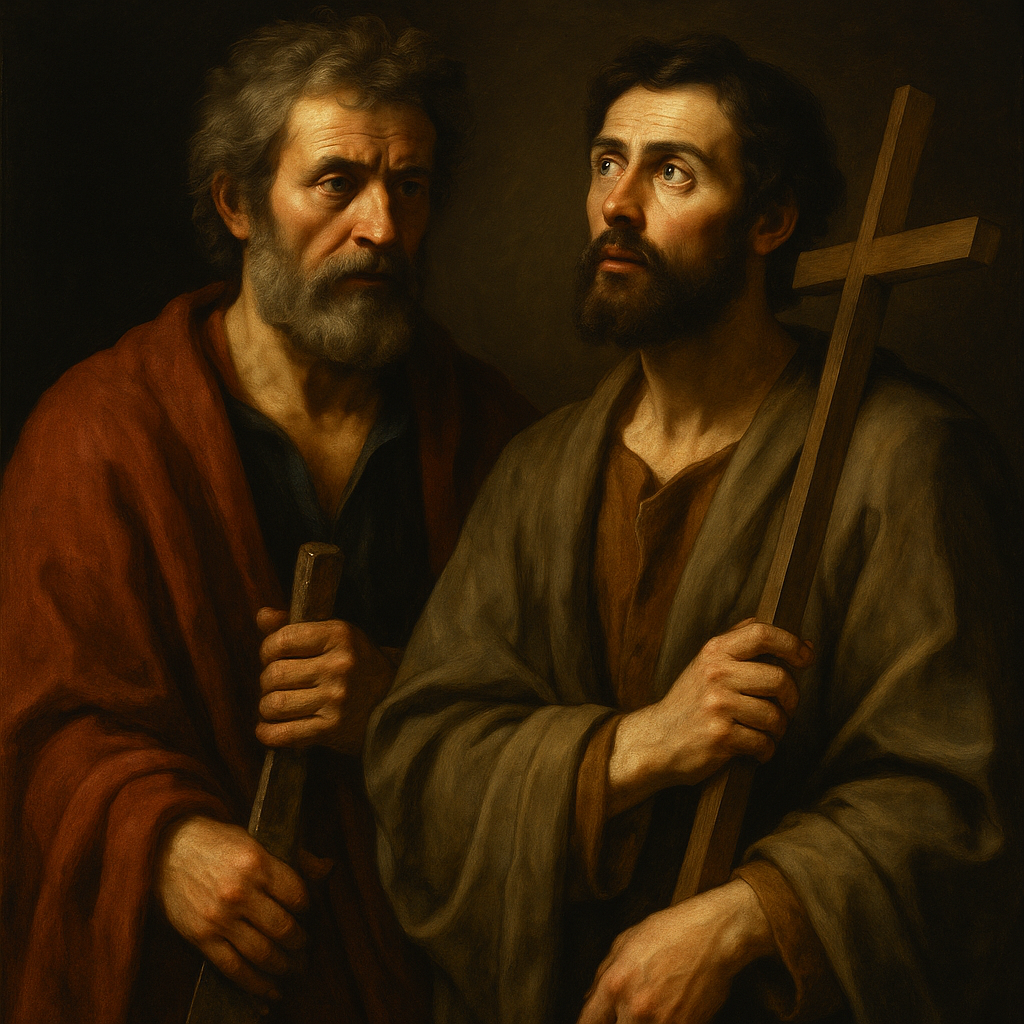
Saints Simon and Jude were chosen by Christ to be among His Twelve Apostles. Though little is recorded about them in Scripture, tradition holds their faith and zeal as powerful examples of true discipleship. Saint Simon, often called the Zealot (Luke 6:15), was likely associated with a Jewish group known for its fervent devotion to the Law of God. Saint Jude, also known as Thaddeus, is remembered for his compassionate heart and steadfast faith.
Their inclusion among the Apostles reminds us that Christ calls men of diverse backgrounds to work together for the Kingdom. The zeal of Simon and the gentleness of Jude reveal how God transforms human character for divine mission.
Learn more about the Twelve Apostles on the Catholic Encyclopedia
Saint Jude: Patron of Hopeless Causes
Saint Jude, sometimes called Jude Thaddeus, is one of the most beloved saints in Catholic devotion. His short but powerful Epistle of Jude warns believers against false teachings and encourages them to “keep themselves in the love of God” (Jude 1:21). Because his name was similar to that of Judas Iscariot, many were hesitant to invoke him at first. Yet over time, his intercession became associated with impossible and desperate situations.
Millions of faithful Catholics continue to turn to Saint Jude for comfort and miracles. His example teaches trust in God’s providence, especially when human hope fails.
Visit The National Shrine of St. Jude to learn more about his patronage and devotions.
Saint Simon the Zealot: Zeal Transformed by Grace
Before following Christ, Saint Simon may have belonged to a movement of passionate defenders of Israel’s faith and freedom. His title the Zealot reflects a fiery temperament redirected toward the service of the Gospel. Grace purified his zeal, teaching him to conquer not by force but through truth and charity.
Tradition holds that Simon preached in Egypt and Persia, boldly proclaiming Christ in lands steeped in paganism. His courage and endurance in hardship reveal the sanctifying power of grace working in those who give their whole heart to Christ.
You can read more about his missionary work in Butler’s Lives of the Saints.
Missionary Zeal and Shared Martyrdom
According to ancient tradition, Saints Simon and Jude journeyed together as missionaries to Persia, where they preached the Gospel and performed miracles. Their ministry bore fruit among the Gentiles, but it also provoked opposition from idolaters. Refusing to renounce their faith, both Apostles sealed their testimony with martyrdom, dying together for Christ.
Their joint mission and shared death symbolize unity in faith and love. They remind the Church that true friendship is found in serving the same Lord and enduring the same trials for His name.
Feast Day and Devotion
The Church celebrates the feast of Saints Simon and Jude on October 28. Their names appear together in the Canon of the Mass, signifying their enduring unity. The faithful honor them as models of perseverance and intercessors for courage in difficult times.
Praying through their intercession strengthens faith amid modern challenges, inviting every believer to live with apostolic zeal and trust in God’s mercy.
Conclusion
Saints Simon and Jude, Apostles and Martyrs, show that God’s grace unites hearts for one divine mission—to bring the light of Christ to the world. Their lives teach that true discipleship demands courage, unity, and unwavering love.
May their prayers inspire us to remain steadfast in faith and to serve Christ boldly, no matter where He sends us.
To read more about their feast and legacy, visit Vatican News – Feast of Saints Simon and Jude
Did you enjoy this article? Share it with your friends and family!