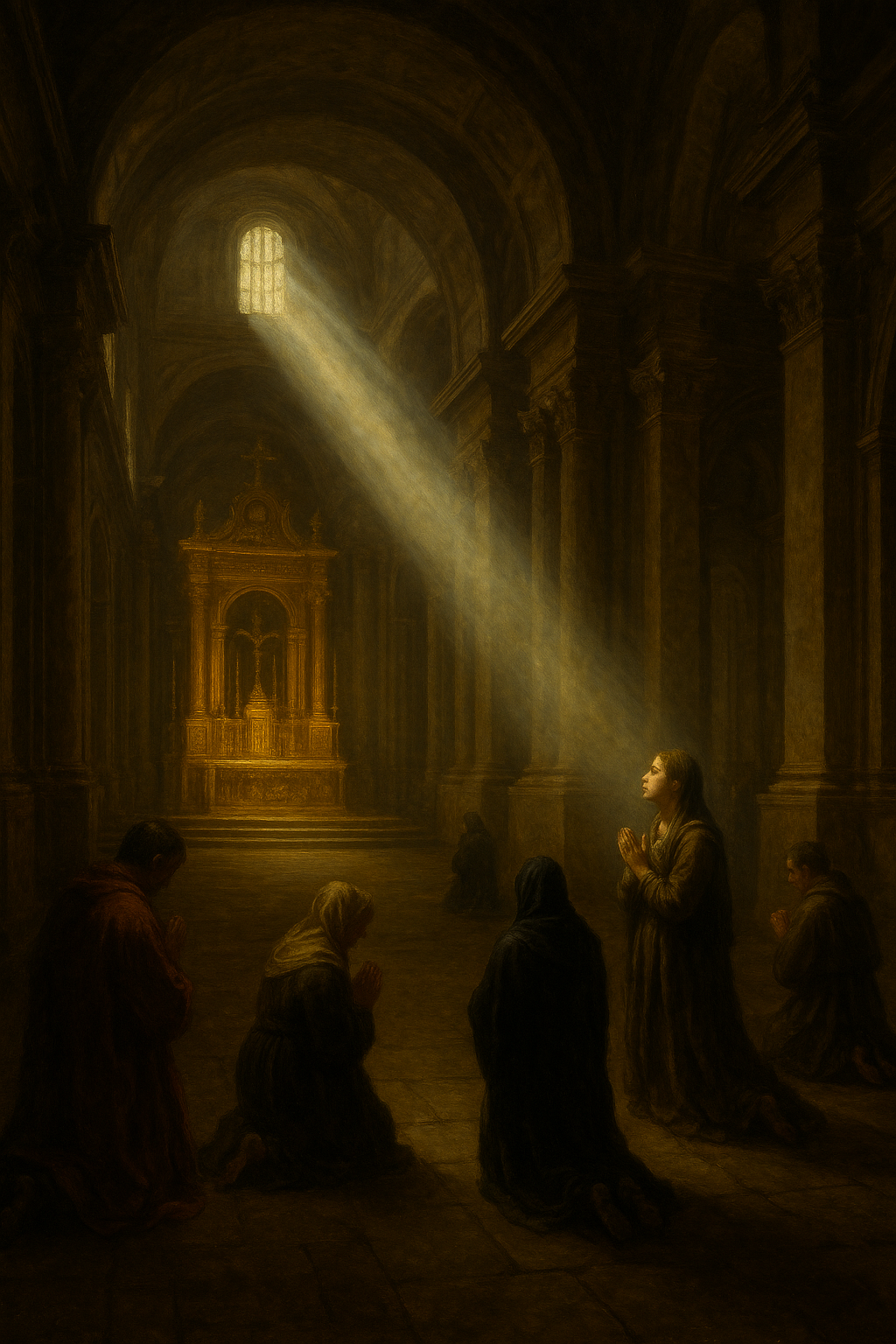
Every year on November 9, the Church celebrates the Dedication of the Lateran Basilica—the cathedral of the Bishop of Rome, who is the Pope. This sacred place, officially called the Archbasilica of the Most Holy Savior, holds the title “Mother and Head of all churches in the city and the world.”
The feast is not just about a building. It honors the unity and universality of the Catholic Church, which finds its visible center in the See of Peter. From Rome, faith radiates to every corner of the world.
The First Christian Basilica in Rome
In the fourth century, Emperor Constantine donated part of his Lateran Palace to the Church. Around 324 AD, Pope Sylvester I consecrated it to Christ the Savior. Later, devotion to St. John the Baptist and St. John the Evangelist grew, and their names were added to the basilica’s title—thus it became known as St. John Lateran.
For nearly a thousand years, the Lateran Palace served as the home of the Popes. It witnessed councils, decrees, and moments that shaped the Church’s history. Even when the papal residence moved to the Vatican, the Lateran remained the Pope’s cathedral and a symbol of the Church’s unity.
To explore more of its foundation and architecture, visit Wikipedia – Archbasilica of Saint John Lateran.
The Feast’s Spiritual Meaning
This feast celebrates more than stone and marble. It celebrates the living Church, the mystical Body of Christ. The Lateran Basilica stands as a sign of the Church’s endurance and divine mission.
Saint Paul reminds us: “You are God’s building” (1 Corinthians 3:9). Every baptized soul becomes a living temple where God dwells. The dedication of this ancient basilica, therefore, calls each of us to renew our hearts as houses of prayer and grace.
Beauty That Lifts the Soul
Inside the Lateran Basilica, art and faith meet in breathtaking harmony. Its golden mosaics, marble columns, and radiant ceiling reflect heaven’s glory. The high altar, built over relics of Saints Peter and Paul, links the faithful to the apostles whose witness built the Church.
Nearby stands the Lateran Baptistery, one of the oldest in Christianity. There, countless believers received new life in Christ. Each baptism echoes the Church’s mission to bring souls from darkness into the light of salvation.
You can learn more about its art and history at the Vatican website – Basilica of St. John Lateran.
Unity of the Church Throughout the World
As the Pope’s cathedral, the Lateran Basilica symbolizes the Church’s unity. Every diocese and parish is spiritually connected to this Mother Church. When the faithful gather for Mass, they are united with believers everywhere through one altar, one faith, and one shepherd in Christ.
The Latin inscription on the façade proclaims:
“Omnium urbis et orbis ecclesiarum mater et caput”
“Mother and head of all churches in the city and the world.”
This truth reminds every Catholic that unity in the Church flows from communion with the Holy Father and the teaching of the apostles.
A Call to Be Living Temples of God
The Dedication of the Lateran Basilica invites every believer to spiritual renewal. God desires not only to dwell in magnificent churches but also in humble, faithful hearts. Each act of charity, forgiveness, or prayer strengthens the living temple of the soul.
As Pope Benedict XVI said:
“The temple of stones is a symbol of the living Church—God’s people made holy by the Spirit.”
Through faith and grace, the Church on earth becomes a reflection of God’s eternal dwelling in heaven.
Conclusion
The Feast of the Dedication of the Lateran Basilica reminds us that the Church is both visible and spiritual—a sacred home of worship and a living communion of believers. From the heart of Rome, this ancient cathedral continues to proclaim that Christ is present among His people.
“Lord, make us living stones of Your holy Church.”