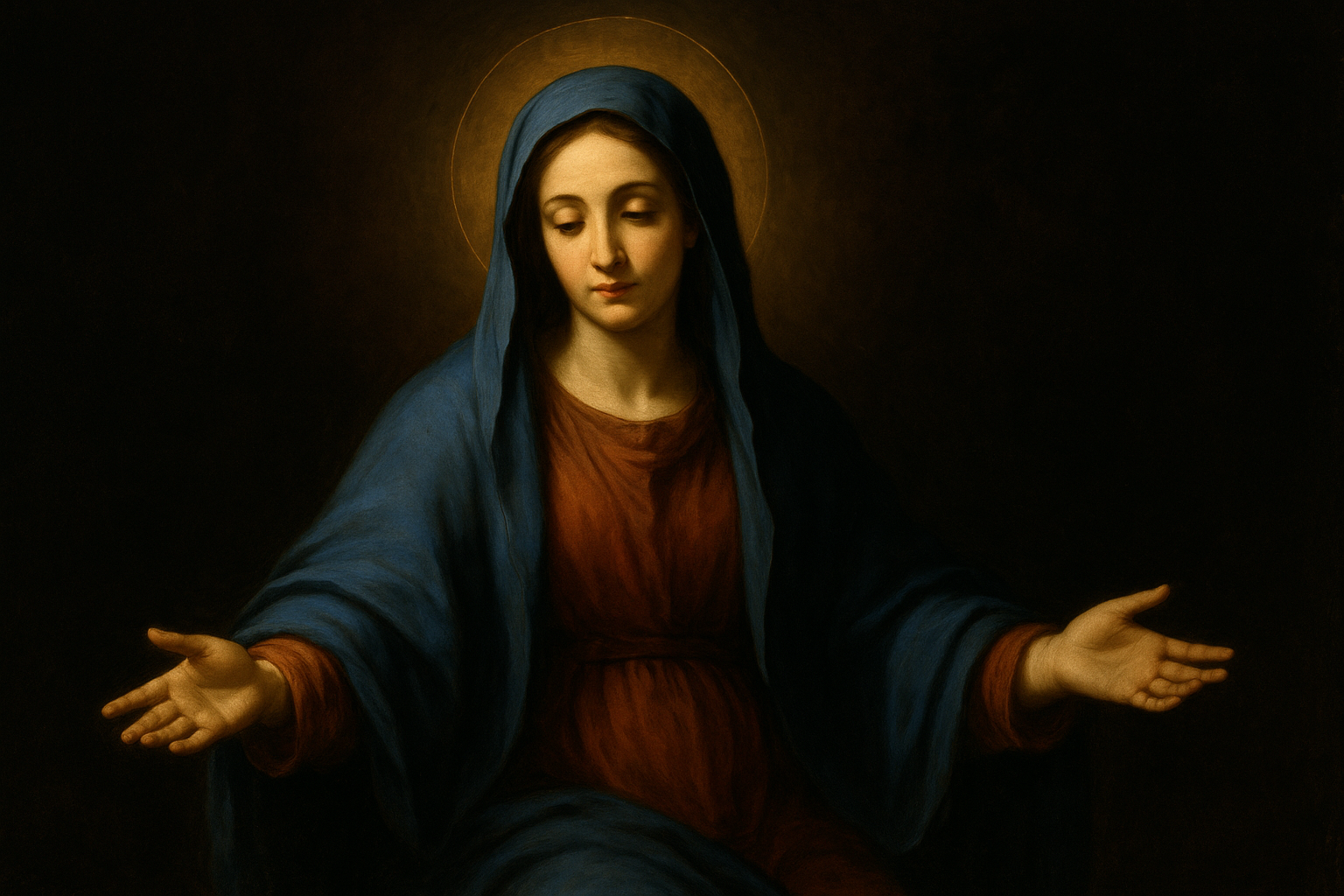
The Maternity of the Blessed Virgin Mary is one of the most beautiful truths of the Catholic faith. It celebrates Mary as the mother of Jesus Christ, the Son of God, and the spiritual mother of all humanity. Her divine motherhood, solemnly affirmed at the Council of Ephesus in 431 A.D., reveals her unique role in salvation history.
This feast invites the faithful to reflect on the mystery of the Incarnation, where the eternal Word took flesh in Mary’s womb. By honoring her maternity, the Church honors the One she bore—Jesus Christ, true God and true Man.
“From Mary, Jesus took His flesh; and through Mary, we are given the grace of redemption.”
To learn more about this dogma, you may visit the Council of Ephesus entry on Wikipedia
Mary, the Mother of God (Theotokos)
The title “Mother of God” (Theotokos) forms the foundation of Marian devotion. When the Church declared Mary as Theotokos, it did not elevate her above Christ. Rather, it safeguarded the truth about who Christ is.
By proclaiming that Mary is the Mother of God, the Church teaches that Jesus is one divine Person with two natures—divine and human. Therefore, Mary truly gave birth to God in the flesh.
Saint Cyril of Alexandria, who defended this teaching, beautifully said:
“If our Lord Jesus Christ is God, how could the holy Virgin who bore Him not be called the Mother of God?”
This title reminds all Christians that salvation began with Mary’s humble fiat, her “yes” to God’s plan at the Annunciation (Luke 1:26–38).
The Feast and Its History
The Feast of the Maternity of the Blessed Virgin Mary appeared first in local churches before becoming universal. It was granted to Portugal in 1751 by Pope Benedict XIV. Later, Pope Pius XI, through the encyclical Lux Veritatis (1931), extended it to the whole Church to honor the 15th centenary of the Council of Ephesus.
This feast emphasizes Mary’s close connection with Christ’s redemptive mission. Traditionally, it was celebrated on October 11. However, after the liturgical reforms, its theme was integrated into the Solemnity of Mary, Mother of God, now observed on January 1, the octave day of Christmas.
Mary’s Maternity and the Church
Mary’s divine motherhood extends into her spiritual motherhood over the Church. At the foot of the Cross, Jesus entrusted His Mother to the beloved disciple John, saying, “Behold your mother” (John 19:27).
In that sacred moment, Mary became the mother of all the faithful—the Mother of the Mystical Body of Christ. Consequently, her maternal care continues through every generation. As Mother of the Church, she intercedes for her children, nurturing them with love and mercy.
Her example inspires the faithful to live with humility, faith, and trust in God’s will.
Theological Significance of the Divine Motherhood
The Maternity of the Blessed Virgin Mary is not merely a title of devotion. It is a central truth in the mystery of salvation. Through Mary, God entered human history. Her cooperation in the Incarnation shows how divine grace works through human freedom.
Mary’s motherhood is both physical and spiritual. It embraces her role in bearing Christ and in nurturing the life of grace within the Church.
Saint John Paul II expressed this beautifully in Redemptoris Mater:
“Mary’s motherhood in the order of grace continues uninterruptedly from the consent which she loyally gave at the Annunciation.”
Thus, her divine maternity bridges heaven and earth. It reveals how God’s plan unites love, obedience, and redemption in one holy mother.
Conclusion
In celebrating the Maternity of the Blessed Virgin Mary, the Church invites the faithful to deepen their love for the Mother of God. Through her, we see the gentleness of divine mercy and the strength of perfect faith.
To honor her maternity is to recognize the mystery of God made man. It is also to acknowledge the tenderness with which Christ entered our world.
As we pray, “Holy Mary, Mother of God, pray for us sinners,” we remember that her motherhood remains a living reality. She continues to care for us with unending compassion, leading every soul closer to her Son.
Suggested Links: