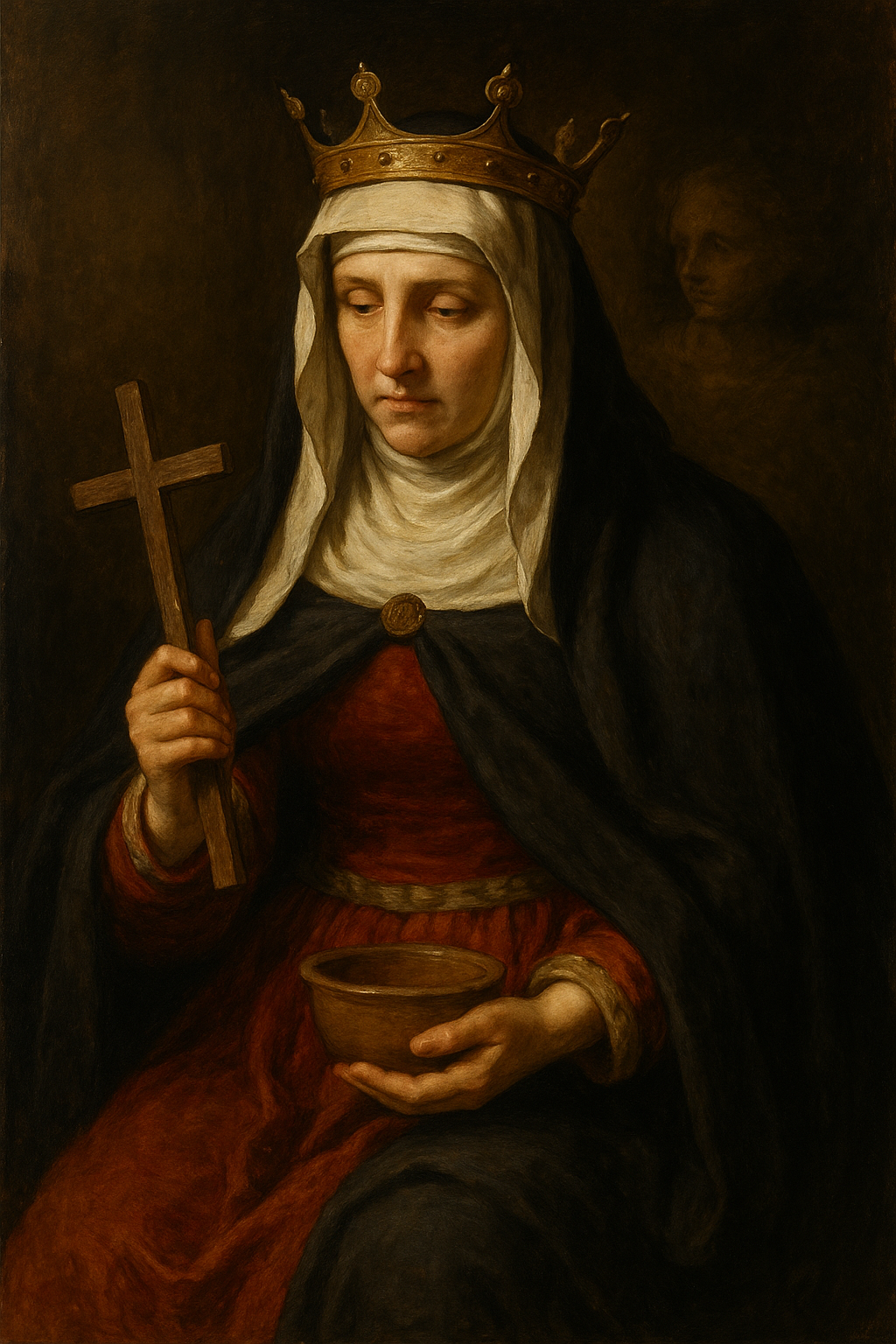
Saint Hedwig of Silesia was born around 1174 into a noble Bavarian family. Through marriage, she became Duchess of Silesia and Poland. However, she never allowed wealth or status to overshadow her devotion to Christ. Known for her humility, prayer, and charity, Hedwig faithfully served both her family and the poor. After the death of her husband, she deepened her commitment to God, living in simplicity and holiness. Canonized by Pope Clement IV in 1267, she is remembered as a patroness of Silesia and widows.
For a concise overview, see the Wikipedia page on Saint Hedwig of Silesia
Marriage and Family Duties
Hedwig married Henry I the Bearded, Duke of Silesia, and together they raised a large family. She guided her children in faith while encouraging devotion to Christ above worldly ambition. Even as a duchess, Hedwig chose a life of moderation instead of luxury. Moreover, she and her husband actively supported monasteries, hospitals, and churches, ensuring that the spiritual and material needs of their people were cared for.
A Widow Dedicated to God
When her husband died in 1238, Hedwig embraced widowhood with grace and faith. She moved to the Cistercian convent at Trzebnica, founded by her family, and lived a life of prayer, fasting, and charity. Although she did not take formal vows, she acted as one consecrated to God, serving the sick and poor with compassion. Because of her example, many came to see that widowhood could become a holy vocation centered on Christ.
For more about her religious life, see the Catholic Encyclopedia.
Legacy of Charity and Humility
Hedwig’s sanctity became most visible through her works of charity. She personally cared for lepers, widows, and orphans, while also giving away her wealth to support the needy. Furthermore, she lived simply, often walking barefoot as a penance. Her humility and service made her beloved by her people, who revered her as a mother and benefactress, a noblewoman who embodied the Beatitudes.
Canonization and Veneration
The Church formally recognized Hedwig’s holiness in 1267 when Pope Clement IV canonized her. Her tomb at Trzebnica quickly became a site of pilgrimage, and many miracles were reported through her intercession. Today, she is honored as the patroness of Silesia, orphans, and widows. Her feast day is celebrated on October 16th, inviting the faithful to imitate her humility and love for the poor.
Conclusion
Saint Hedwig, Widow, demonstrates that holiness can flourish in every stage of life. As a wife, mother, duchess, and widow, she lived with humility, charity, and prayerful devotion. Her life encourages widows and all Christians to trust God fully and to serve others generously. Through her intercession, the faithful learn to embrace simplicity, mercy, and holiness in daily life.
To learn more about her feast and patronage, visit Catholic.org’s entry on Saint Hedwig.