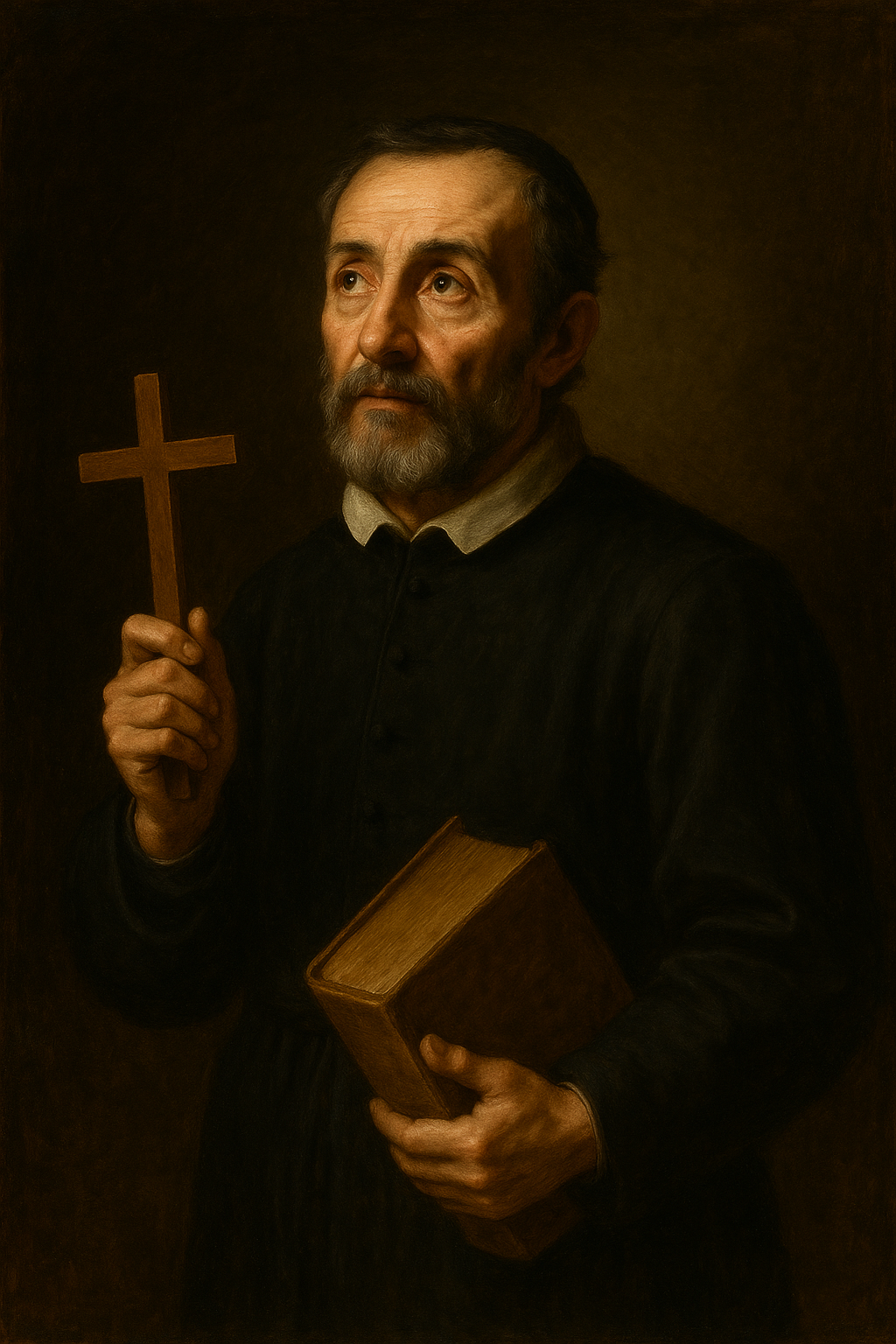
Saint John Leonardi, Confessor, was born in 1541 in Diecimo, near Lucca, Italy. From his youth, he showed a deep devotion to prayer and a strong desire to serve the Lord. Although he trained as a pharmacist and cared for the sick, his heart longed for the priesthood. After his ordination in 1572, he dedicated himself to preaching, catechesis, and reform. Moreover, his efforts echoed the spirit of the Catholic Counter-Reformation, guided by the decrees of the Council of Trent.
Founder of the Clerks Regular of the Mother of God
In 1574, John Leonardi established a new congregation later known as the Clerks Regular of the Mother of God. The community sought to renew faith through sound catechesis, missionary outreach, and service to the poor. They also promoted Eucharistic devotion and priestly holiness. At first, civil and ecclesiastical authorities resisted his foundation. However, John persevered, and eventually the congregation received papal approval, ensuring its lasting impact
Promoter of Missionary Zeal
John Leonardi constantly looked beyond Italy to the wider mission of the Church. Together with Blessed Valignano, he promoted the early vision of the Sacred Congregation for the Propagation of the Faith (Propaganda Fide). This initiative later guided Catholic missionary work throughout the world. In addition, his missionary outlook anticipated the Church’s universal mission, showing his conviction that reform within the Church should naturally overflow into evangelization.
Trials and Perseverance
Opposition marked much of his life. Local authorities who resisted reform forced him into exile more than once. Nevertheless, John refused to abandon his mission. He relied on prayer, study, and pastoral care to strengthen his ministry. Furthermore, he placed the renewal of Christian life above personal comfort or recognition, demonstrating unwavering trust in God’s providence.
Death and Canonization
Saint John Leonardi died in Rome on October 9, 1609, after contracting the plague while ministering to its victims. His life of charity, reform, and missionary zeal inspired generations. Pope Pius XI canonized him in 1938, confirming his holiness for the universal Church. Today, the Church honors him not only as a model priest but also as the patron of pharmacists. His feast day is celebrated on October 9.
Conclusion
The legacy of Saint John Leonardi continues through the religious communities he founded and the missionary spirit he inspired. Indeed, his witness reminds us that reform begins with personal holiness, is nourished by the sacraments, and always flows into service for others. Therefore, his life challenges the Church to remain rooted in Christ while courageously opening its arms to the world.
To learn more about his life, you can visit: