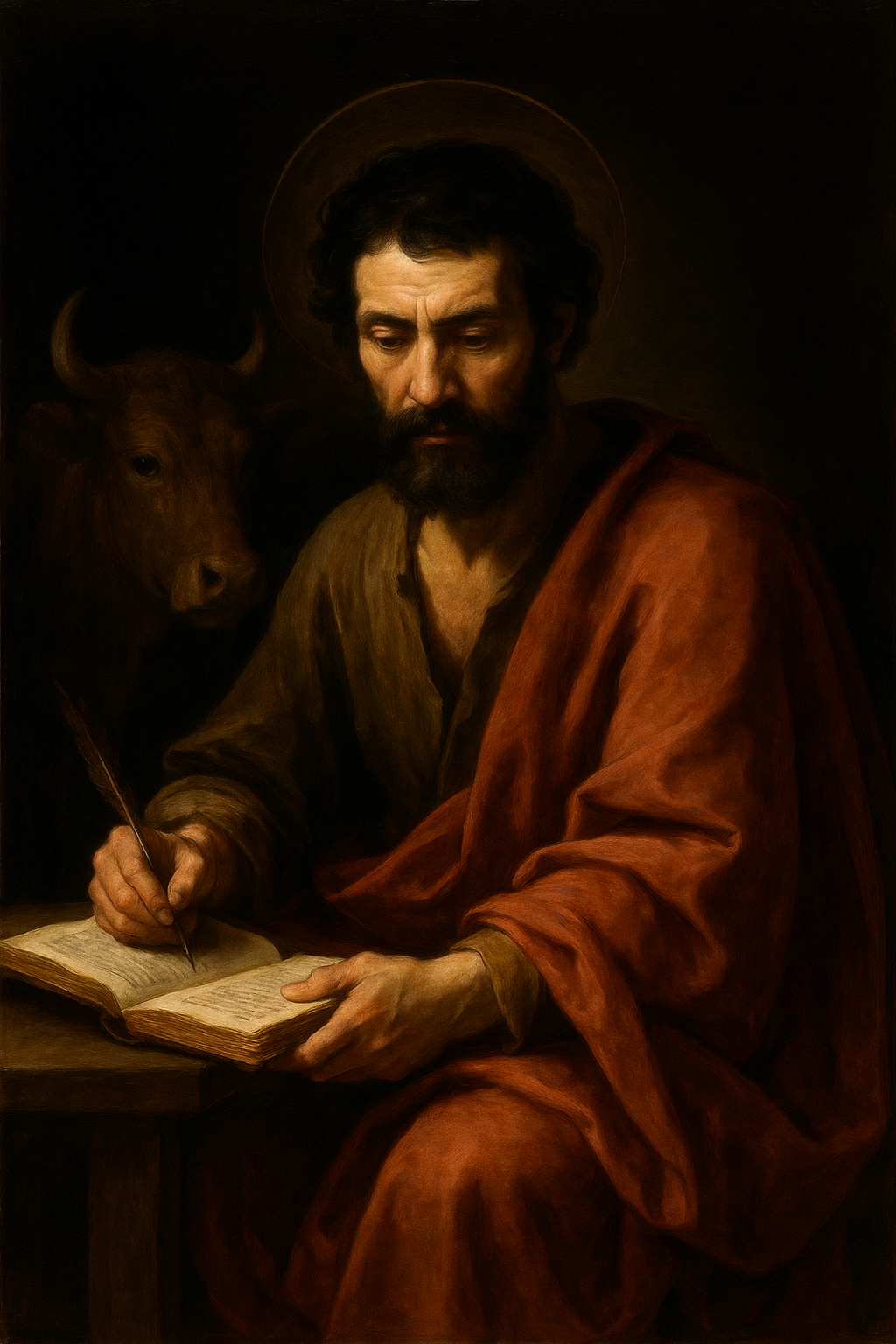
Saint Luke, Evangelist, holds a unique place in the life of the Church. A physician by profession and a Gentile convert to Christianity, Luke became one of Saint Paul’s closest companions in missionary journeys. Inspired by the Holy Spirit, he wrote both the Gospel of Luke and the Acts of the Apostles, works that highlight God’s mercy, the mission of the Church, and the power of the Holy Spirit. His writings make up nearly one-fourth of the New Testament.
For a historical overview, see the Wikipedia page on Saint Luke
Luke the Evangelist and His Gospel
Luke’s Gospel emphasizes the compassion of Christ, showing Him as the Savior who came for the poor, the outcast, and the sinner. He alone gives us the parables of the Good Samaritan and the Prodigal Son, offering timeless lessons on mercy and forgiveness. Because he wrote as a historian as well as a disciple, his Gospel includes careful details about events, places, and people. His writings remind the faithful that God’s love extends to all nations and peoples.
Companion of Saint Paul
Tradition and Scripture testify that Saint Luke traveled with Saint Paul on his missionary journeys. Paul refers to him as “the beloved physician” (Colossians 4:14). Luke remained faithful even in times of trial, standing by Paul during his imprisonment in Rome. His loyalty and encouragement show the importance of Christian friendship in the work of evangelization.
For additional background, see the Catholic Encyclopedia on Saint Luke
Patronage and Symbols
The Church venerates Luke not only as an Evangelist but also as the patron saint of physicians, artists, and butchers. Christian art often depicts him with an ox or calf, symbols of sacrifice that reflect his Gospel’s focus on Christ’s priesthood. His careful descriptions of the Annunciation, Nativity, and childhood of Jesus also suggest that he drew from the testimony of the Blessed Virgin Mary, making his writings especially beloved.
Martyrdom and Legacy
Though the details of his death remain uncertain, tradition holds that Saint Luke died a martyr in Greece around 84 AD. His relics later found their way to Constantinople and Padua, where he continues to be honored. The Church celebrates his feast on October 18th, reminding the faithful of his role in spreading the Gospel and strengthening the early Church.
Conclusion
Saint Luke, Evangelist, shows us the power of words inspired by the Holy Spirit. His Gospel and Acts reveal Christ as healer, Savior, and merciful Redeemer. His life as physician, missionary, and martyr testifies that faith must be lived, shared, and defended. Through his intercession, may Christians today proclaim the Good News with the same courage and love.
To learn more about his feast and devotion, visit Catholic.org’s page on Saint Luke.