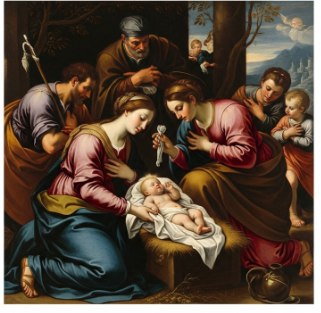
The Christian liturgical calendar gives exceptional honor to the Nativity of St. John the Baptist, celebrated on June 24. Unlike most saints, the Church celebrates St. John the Baptist’s birth, not his death. He is one of only three figures whose birth the Church commemorates, along with Jesus Christ (December 25) and the Blessed Virgin Mary (September 8).
This distinction highlights John’s extraordinary role: God chose him from the womb to prepare the Messiah’s way. His birth celebration ranks among the oldest Christian feast days. It is rich in religious symbolism, cultural customs, and deep liturgical roots, especially within Catholic and Orthodox traditions.
Since at least the 4th century, the Church has commemorated St. John the Baptist’s birth. It assigned his feast to June 24, precisely six months before Christmas, aligning with the Gospel of Luke (Luke 1:36). This placement is more than just symbolic. It reflects the cosmic liturgical order, aligning John’s birth with the summer solstice. During this time, days begin to shorten. As St. Augustine noted, this decline mirrors John’s words: “He must increase, but I must decrease” (John 3:30), reflecting his mission’s humility.
In traditional liturgies, particularly in the Extraordinary Form of the Roman Rite, the day features solemn High Masses. Chanting of the Divine Office and readings focusing on John’s miraculous birth and divine purpose mark the occasion. Churches may also hold vespers and processions, especially in regions honoring him as a patron saint.
Across the Christian world, particularly in Europe and Latin America, people observe the Nativity of St. John the Baptist with rituals and celebrations rooted in centuries-old customs:
St. John’s Bonfires: A Fiery Custom Among the most enduring customs is lighting St. John’s bonfires on the eve of June 24. This practice, strong in countries like France, Spain, Italy, and Ireland, symbolizes the light John brought by heralding Christ’s coming. The fires also represent spiritual purification, warding off evil and invoking blessings.
Blessed Herbs & Waters on St. John’s Day In traditional Catholic rural communities, people customarily gather and bless medicinal herbs and water sources on this day. People believe these have special healing properties due to the feast’s sanctity and John’s connection to nature and ascetic life. Springs and wells dedicated to the saint often become pilgrimage sites.
St. John the Baptist Processions Many Catholic countries, especially those with deep historical devotion to St. John the Baptist—such as Portugal, Brazil, and parts of Eastern Europe—mark the day with religious processions. These feature statues of the saint, traditional garb, music, and prayer. Children often dress as John in these processions, representing his innocence and prophetic calling.
Patron Saint Celebrations for St. John St. John the Baptist is the patron saint of many cities and regions, including Florence (Italy) and Quebec (Canada). In these places, the Nativity becomes a public and religious holiday. It is celebrated with liturgies, communal meals, and civic ceremonies deeply intertwined with Catholic identity.
The Church venerates St. John the Baptist not only for his proximity to Christ. It also honors him for his unwavering fidelity to truth, humility, and his role as the Old Covenant’s last prophet and the New Covenant’s first herald. His nativity points to themes of divine providence, holiness before birth, and the enduring value of sacrificial obedience to God’s will.
The timeless nature of this feast reminds the faithful of salvation history’s continuity. It calls believers to deeper repentance, preparation for the Lord, and reverence for tradition.
The Nativity of St. John the Baptist is more than just a saint’s birth commemoration. It celebrates God’s faithful, unfolding plan. The Church has honored this plan across centuries through sacred liturgy and enduring customs. By observing this feast with traditional practices, the Church unites past and present in a living witness to the light that John bore—the light of Christ.
Here are some links for further reading: